Furniture for your event: rent, build or buy

Furniture for your event: rent, build or buy

The right furniture can set the mood – as well as provide comfort for the attendees.

The key is to create an environment that enhances the event. It’s not just about renting furniture, it is about creating the right ambiance.

For example, it’s trending now to provide open space seating at meetings, instead of just rows of chairs. People are different sizes, they sit in different ways, yet there is a tendency to make all chairs alike. With open space seating you try not to furnish any room with chairs that are identically the same.

pexels-photo-60166-large

Choose a variety of different chairs, some big, some small, some softer than others, some with rockers, some with arms, some wicker, some wood, some cloth. Put some highboys in the back of the room for people that prefer to stand. Have some tables, for those that prefer table seating.

A furniture rental company can help you plan the space. Most cities that host a lot of conventions have one or more furniture rental companies. From these, you can rent all types of furniture suitable for indoor and outdoor events.

You can even buy their furniture. At least once a year, most furniture rental companies have liquidation sales to reduce their inventory so they can bring in new and fresh designs.

This is a perfect time to refurbish your office or home with a new look by adding new sofas or easy chairs. Contact furniture rental companies in your area and get put on their mailing list to be notified when the liquidation sales will occur.

The Perfect Agenda

The Perfect Agenda

Agendas can greatly improve the efficiency and productivity of any decision process.

One good agenda can cut the number of meetings needed to complete a project in half and greatly reduce the tendency for meetings to branch off into discussions that are not useful to goal achievement.


The goal of an agenda is to facilitate the decision-making process among group members.

This may be for a technology upgrade or a budget discussion.

The agenda helps to keep meeting attendees focused on the final decision.

Agendas also make it easier to evaluate the success of the meeting by providing a checklist for follow-up and accountability.

The Role of an Agenda

desk-laptop-notebook-pen-large

The first line of the agenda should state the goal and purpose of the meeting.

Some agenda formats prefer to state the goal along with sub-goals after each agenda item. Both formats establish a framework for discussion. Agendas can vary from simple to complex.

They can include attachments and reading material or the agenda from the previous meeting.

The type of format used is generally established by the formality and length of the meeting.

A good rule of thumb is that the format should match the dress of the meeting participants; that is, a meeting full of sandals and shorts can get by with an informal agenda while a room full of suits may require a formal agenda.

Formats

smartphone-notebook-technology-calendar-large

The short or informal meeting can be subsumed into an email or a meeting reminder.

It might contain one line for the goal of the meeting and then three to five short discussion points.

The long agenda is usually a full page, which includes a title, meeting location, date and time, goals and topics or points of discussion. Long meetings should also include times for each discussion topic and the name of the presenter.

Both agenda formats should end with a section for “Next Steps” for follow-up. These “Next Steps” will become the basis for agenda topics at the next meeting.

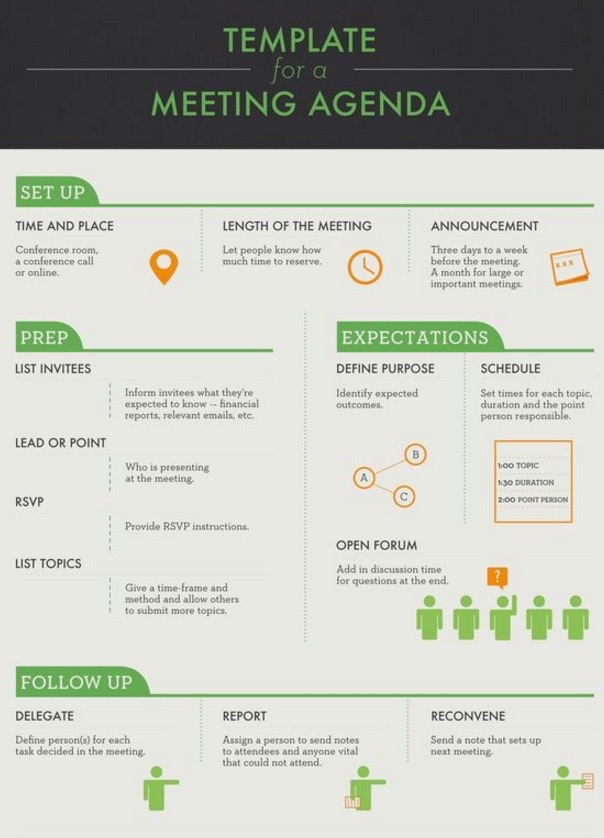
Check the infographic below for some agenda format examples:

Schermata 2016-05-31 alle 11.05.02

7 Tips for better sleep on the road

7 Tips for better sleep on the road

If there’s one thing planners need, it’s a good night’s sleep. But it’s not always easy to do when there are hundreds of event details swirling through your brain at 2 a.m.

Head out on the road, add an unfamiliar bed, a few time zone changes and an over-stuffed schedule, and sleep can become even more elusive. So what’s the solution?

Plan to sleep, as in, put the pieces in place, prep your mind and body and set the stage for sleep success, no matter where in the world you lay your head. Here’s how:

coffee-cup-bed-bedroom-large

1. Pick your room wisely

Ask for a room that’s a long way from typical hotel noise-makers like guest elevators, room service/housekeeping elevators, ice machines, vending machines or laundry areas. Also steer clear of guestrooms near function rooms, lobby bars or outdoor pools, particularly in ‘party towns’ like Miami, New Orleans, Vegas, etc., where events can be loud, long and impossible to sleep through. In bustling cities, rooms on higher floors will put a bit more distance between you and the din of nearby highways and early morning garbage truck pickups.

2. Embrace the ‘Do Not Disturb’ sign – and the security latch

Whether you’re dealing with jet-lag or just need a 20-minute nap, you’ll sleep a lot better if you embrace the power of the Do Not Disturb sign – it’s your first line of defense against the well-intentioned but sleep-disruptive knocks from hotel staff. The second line of defense: flipping the door lock and security latch to prevent intrusions.

3. Wear your sunglasses…at night?

Though it may sound a bit strange, and look a bit odd to the room service guy, wearing ‘blue blockers’ or a pair of sunglasses with amber lenses at night can help you fall asleep more easily, particularly if you go to bed clutching a smartphone or tablet. Why? Because screens blast blue light into your eyes, which the brain interprets as daylight. All that light suppresses the release of our fall-asleep chemicals and triggers the release of daytime-alertness-chemicals, right at the time when we’re trying to drift off.

Don’t have amber shades? Then improvise with your usual sunglasses to reduce the ‘screen-shine’ and always remember to dim screen(s) to the max to prevent those middle of the night texts from lighting up your room and waking your brain.

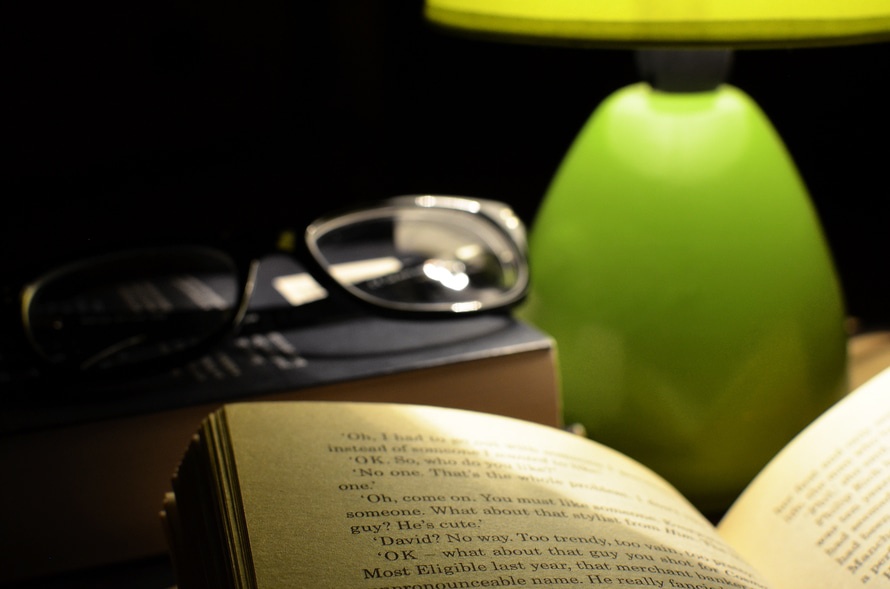
light-dark-bed-lamp-large

4. Put the brakes on your brain

You’ll sleep better if you put the brakes on the brainwave activity that can keep you over-revved at night. Start by shutting down the laptop, TV and smartphone at least an hour before you plan to go to sleep. Next, strap on the headphones and tune into a sleep-inducing play list  or guided meditation to help you drift off.

You can also try Brainwave Power Music  which utilizes ‘binaural beats,’ a therapeutic collection of meditative sound patterns designed to help encourage deep, restful sleep.

5. Wind down your body

The simplest way to prep your body for sleep is with a hot bath. Some tub time will help open the blood vessels and relax muscles, making sleep come more easily. To boost the sleep-promoting effects, some lavender essential oil added to the bath or spritzed around the room can help cut anxiety and insomnia according to a recent British study from the University of Southampton.

6. Deprive your senses

When you’re sleepless in Seattle or wide-awake in Wellington, black-out curtains, earplugs and eyeshades are essential to getting a good night’s rest. Forget to pack the plugs and shades? Then improvise. Try sleeping with a hand towel or spare t-shirt across your eyes to block out light and put bed pillows over your ears to tamp down extraneous noise.

Also—never sleep with the TV on. The constantly flickering light, subtle as it may seem when your eyes are closed, will trick your brain into thinking it’s daytime, making falling asleep and staying asleep more difficult.

7. Ring them bells

When you have an early event to manage or a pre-dawn flight to catch, concerns about sleeping through the alarm can keep you awake and undermine the quality of your sleep once you do finally drift off. Instead of tossing and turning, my strategy is to make it virtually impossible to oversleep – thus the multiple alarm technique, no ‘snooze’ button necessary:
·      Start by setting the alarm on your iPhone and your iPad, placing both well out of arm’s reach.
·      Add to that a wake up call, plus a follow-up call.
·      Top it off with a scheduled-the-night-before room service breakfast delivery, and you’ll be ready for action.
·      Need a bit more backup? Then re-purpose your old, decommissioned Blackberry and use it as an alarm clock. It’s loud, can go for days without charging and never fails.

6 Ways to use GoPro at your events

6 Ways to use GoPro at your events

GoPro helmet-mounted cameras have been around since by Nicholas Woodman invented them in 2004. They’ve made him a billionaire. Even though they are a perfect fit for the events industry, they are underutilized by event planners, who can use them to speed up the action to cover more ground or slow it down when it’s time to show details.

Here are 6 ways in which event and meeting planners can use GoPro.

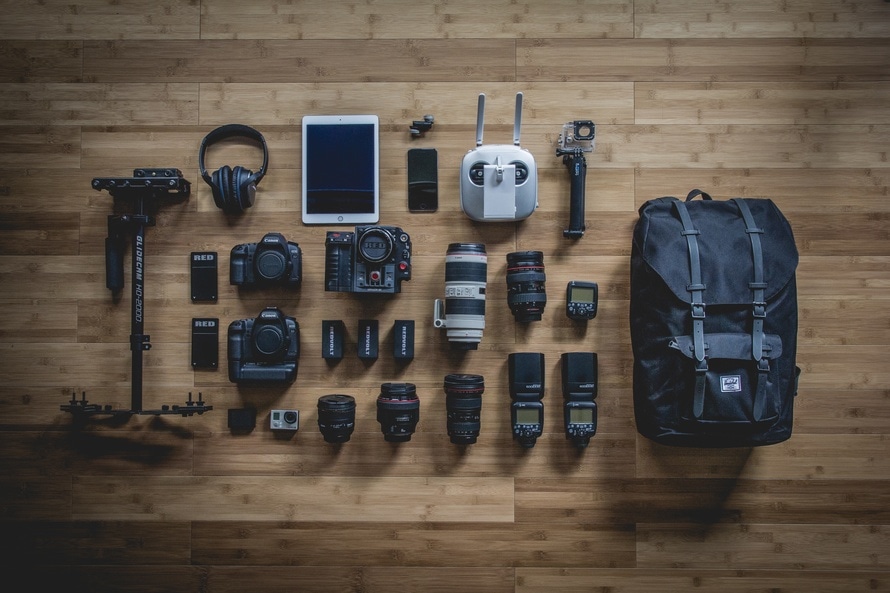
pexels-photo-28855-large

Training and Development

Some processes are very intricate. Learners benefit from seeing the details from the point of view of the individuals carrying out the task. Videos shot using GoPro are an ideal vehicle for capturing minute details and walking learners through tasks step-by-step. Retailer Experticity has created a GoPro channel where associates can log in and learn from custom designed videos.

Capture meetings, conferences, and concerts from the point of view of speakers and facilitators

Instead of just giving lip service to audience engagement, incorporate the audience reactions and the point of view of performers and speakers into video highlights.

Relive Outdoor Adventures

Whether it’s zip-lining, bobsledding, dune bashing, or desert adventures on quad bikes, GoPro is the perfect way for participants to relive their adventures.

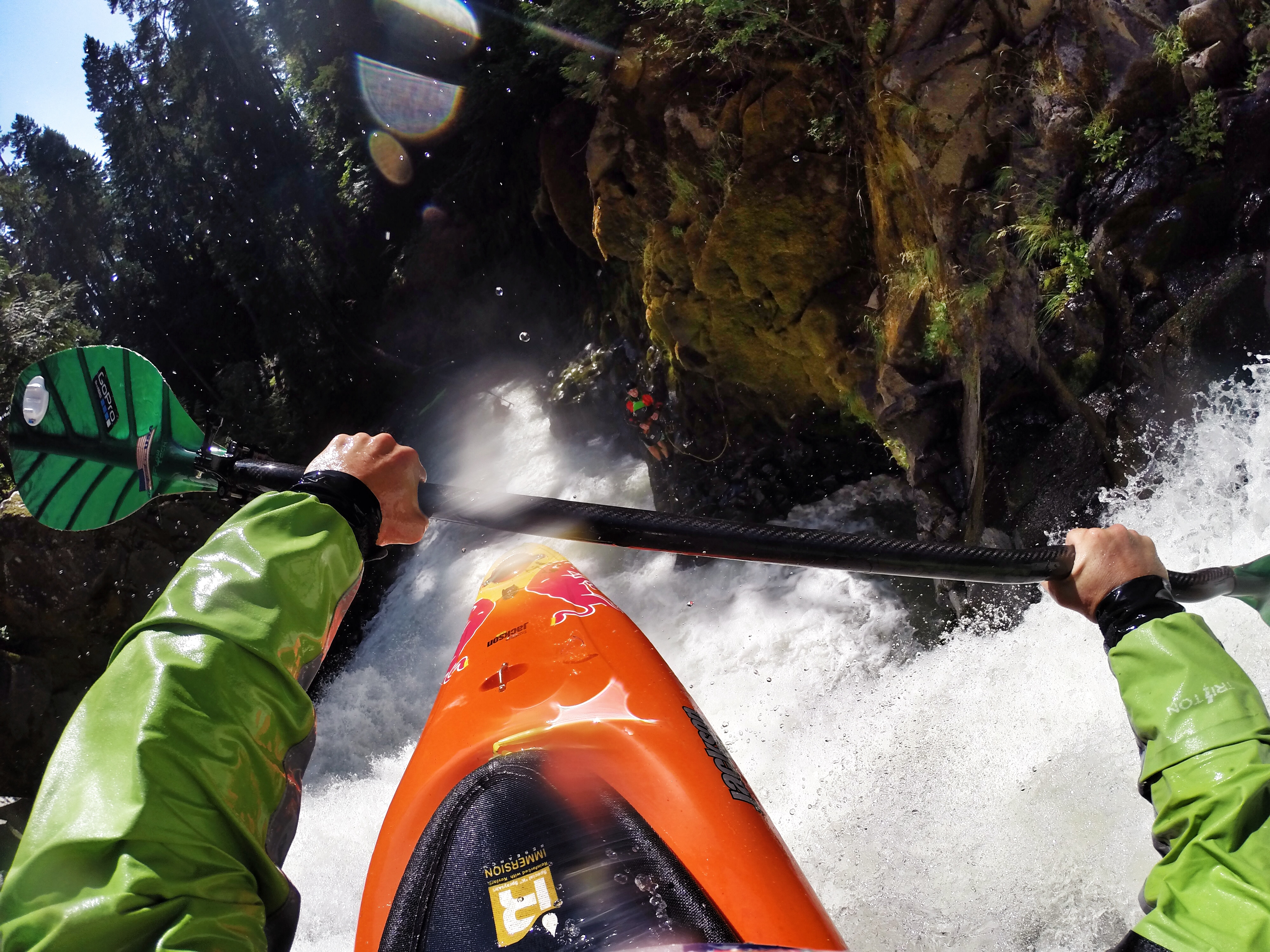
DCIM139GOPRO

Capture the Intensity of Action Sports

For fast-paced action sports like polo, GoPro places viewers in the center of the action. In combination with drones that cover a large territory, GoPro is a great way to convey the full intensity of action sports.
GoPro is in the process of developing a quadcopter drone for release in 2016. Event professionals can look forward to this type of footage.

Provide Tours of Resorts

Site inspections are always the best plan, but, when they are not possible, a professional video with images captured through GoPro can give clients the look and feel of a resort or venue.

Preview Off-the-Beaten-Track Adventures

For adventures in rugged territory, footage from a GoPro camera can give clients the information they require to assess whether or not the experience is a good fit from the group.

Finally, here are some tips for using GoPro for events:

  • Storyboard what you want the final video to look like to ensure that you get all required shots.
  • Be sure to obtain the right mounts and other accessories.
  • Invest in large memory cards and always bring backup as memory cards fill up fast.Carry extra batteries and ensure that all batteries are fully charged.
  • Make sure that the lenses are clean. Unlike a digital camera, it won’t be possible to check the lenses before or after every shot.
  • Shoot when lighting is best. Early morning will produce clear and well-lit shots. Late afternoon shots will have shadows and drama.
Congresso Nazionale FederDolore SICD – Roma, Hotel Sheraton Golf, 16-18 Giugno 2016

Congresso Nazionale FederDolore SICD – Roma, Hotel Sheraton Golf, 16-18 Giugno 2016

È con grande piacere che mi accingo a presentare il nostro Congresso che quest’anno affronterà una patologia che ha un’incidenza enorme e che rappresenta un grande problema sanitario e sociale: il mal di schiena. È dallo scorso anno che abbiamo impostato il nostro Congresso su tematiche specifiche, in modo da avere un filo conduttore che possa coinvolgere le diverse figure specialistiche impegnate nel trattamento della patologia in questione. Nella parte introduttiva del Congresso abbiamo voluto dar spazio ai giovani algologi, che rappresentano la nuova linfa su cui riponiamo le nostre speranze per la crescita e la diffusione della cultura algologica, che ancora stenta ad affermarsi. Ho fortemente voluto, avendolo condiviso con il nuovo Direttivo, dar vita al Forum che vede riunite tutte le Società Scientifiche che a vario titolo rappresentano i cultori di questa disciplina, per poter avviare programmi di ricerca, definire percorsi diagnostico-terapeutici ed esprimere in un documento comune l’opinione riguardo ai contenuti delle linee guida 2016 della CDC (Center for Disease Control and Prevention) sull’utilizzo degli oppioidi ed i rischi di abuso e misuso. Un Focus sarà dedicato alla tariffazione delle procedure, in particolare ai diversi modelli regionali in tema di implantologia spinale. Particolare attenzione è stata rivolta all’uso dei cannabinoidi che verrà affrontato con un vivace confronto tra chi ne sostiene l’utilizzo e chi è contrario. Il cuore del Congresso sarà incentrato sul tema principale: il dolore lombosacrale ed il dolore degli arti inferiori. Saranno coinvolte le diverse figure professionali chiamate di volta in volta in causa nel trattamento di questa dilagante patologia che, con l’allungamento della vita, è destinata ad aumentare. Nella convinzione che la condivisione dei saperi sia fondamentale nel ricercare le migliori soluzioni per migliorare la qualità di vita dei nostri pazienti, i vari specialisti verranno invitati ad esporre il proprio punto di vista e le possibili opzioni terapeutiche di cui la propria specialità dispone, con riferimento alle evidenze cliniche riportate nella letteratura internazionale. L’obiettivo sarà quello di definire un PDTA fortemente condiviso per il trattamento del mal di schiena che, a tutt’oggi, viene affrontato dai vari attori in maniera non coordinata. Le sessioni si svolgeranno con la partecipazione attiva di tutti i relatori coinvolti, in modo da dar vita ad un vivace confronto animato dai moderatori, evitando possibilmente le presentazioni frontali. Nell’ultima giornata sarà aperto un dibattito sulla FBSS e verranno prese in esame tutte le procedure chirurgiche di cui dispone l’algologo, in particolare la neuromodulazione elettrica. A questo riguardo verranno analizzate le nuove tecnologie proposte, con l’obiettivo di definire vantaggi e limiti al fine di disegnare una flow chart del loro utilizzo. La nostra Società è sottoposta a molte sfide e sollecitazioni che provengono sia dall’interno che dall’esterno: è importante saper discernere tra quelle positive e propositive, che vanno accolte, fatte nostre e rilanciate, e quelle ostative e minacciose, che vanno contrastate e respinte. È solo con il vostro aiuto e con la vostra solidarietà che potremo tenere alto il vessillo della Società Federdolore-SICD che si è sempre contraddistinta nella lotta al dolore persistente-cronico.

Nella speranza di potervi incontrare numerosi a Roma, auguro un Buon Lavoro a Tutti

Sergio Mameli Presidente Federdolore-SICD

Copertina
online-registration-icon-536